
Introduction
For a poet, a poem is never just words on a page. It’s a companion, a presence, almost a person of its own. This creativity poem falls in love with the poem itself, not a person or a feeling. “A Poetess” is about exactly that bond: the quiet intimacy between a writer and the poem she is bringing into being, personified simply as “her.” It’s a short piece, but it holds a truth many writers quietly carry that sometimes what we’re most devoted to isn’t a person at all, but the words themselves, and the creativity that gives them shape.
Thank you for reading this post, don't forget to subscribe!Table of Contents
The Poem
Gazing into the thoughts of words,
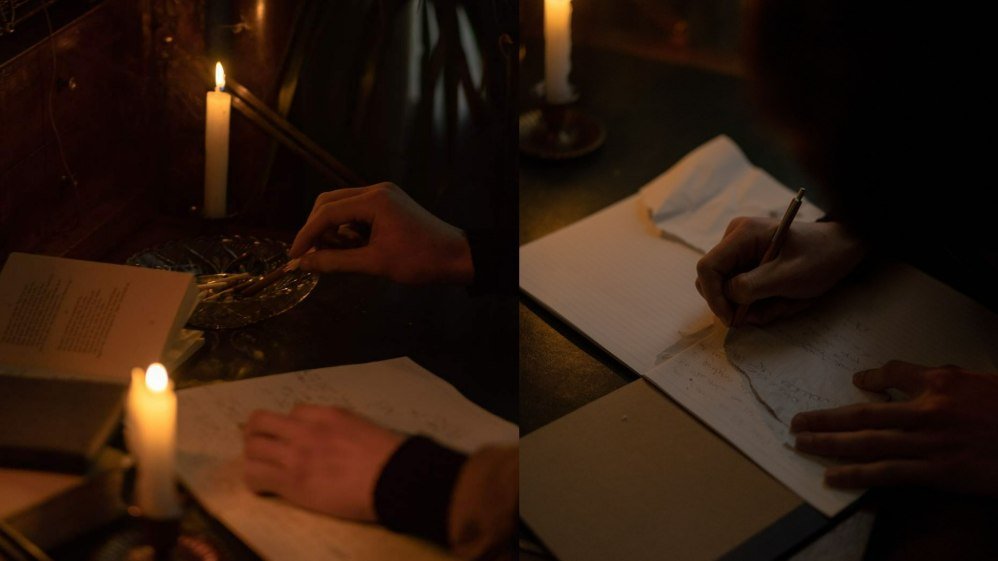
I delight in writing her down, with voices in my head.
Even without a special role in her — the poem —
in the world of my own imagination
I have become the one who gets into her.
If she drifts away, I drown in sorrow,
if the voices fade, sadness deepens with an emotion
I cannot explain —
like being lost in creativity itself.
Even without being written into the poem, I’ve become a companion in its rhythm,
even without closeness in her heart, I exist in the telling,
I have become the one who gets into her.
Backstory
I started writing this poem from his perspective. But as I re-evaluated it, comparing it to my other poems, I realized I actually write in her perspective. That’s when she was created through drafts and drafts, until she took the shape she was meant to have.
As I was drafting, I lost track of time completely. I don’t know how long I sat there, writing. Somewhere in that process, I forgot what I was even trying to say. What I was defending or trying to express through the poem in the first place. All I was left with was her. She became real to me, even though I couldn’t remember anymore why I started writing her at all.
This is not the first time I have written about devotion that exists without full closeness In the Shadow of Her Heart explores a similar absence, and Timeless Wait carries the same ache of waiting for someone who might drift away. Here, though, the “her” isn’t a person at all it’s the poem itself.
It’s short, but it means so much to me as a writer, almost like a reflection of my life through words. If you have ever sat down to write one thing and ended up somewhere completely different, this poem is for you. A small reminder that sometimes the writing knows more than the writer does. She became real to me, even though I couldn’t remember anymore why I started writing this creativity poem at all
FAQ
- What is “A Poetess” about?
“A Poetess” is a creativity poem about the bond between a poet and the poem she is writing, personified as “her” describing the poet as someone absorbed into the poem rather than merely its author. - What makes this a poem about creativity rather than romance?
Unlike a love poem addressed to a person, this creativity poem directs its devotion toward the creative process itself the poem, the voices, the act of writing making creativity, not romance, the true subject. - Why do poets personify their poems as a person?
Poets personify their poems to turn an abstract creative process into something felt and relatable. Personification compresses complex feeling into a single, striking picture, and readers connect with it instinctively because people naturally respond to anything that seems human. Write seen - What does it mean to feel bonded with your own writing?
Feeling bonded with your own writing means the poem stops feeling like a separate product and starts feeling like a presence you exist alongside something you return to, worry over, and miss when you are away from it. - Why do writers lose track of time while writing poetry?
Writers often lose track of time while writing because the act of creating pulls full attention into the work itself the very state this creativity poem captures, where the original intention can fade, leaving only the piece itself.
Have you ever fallen in love with something you created before you could even explain why? What did you name it, or how did you know it had become real to you?